A tree branch bookshelf is more than a place to store novels, art books, and treasured objects. It is a statement piece that blends function with sculpture, bringing the irregular beauty of nature into the home. Unlike standard shelving, a tree bookshelf uses branching lines, trunk-inspired supports, and organic silhouettes to create visual movement on the wall or floor. The result is storage that feels expressive, memorable, and perfectly suited to interiors that need character.

From compact apartments to spacious living rooms, tree-inspired shelving can adapt to many styles. It can appear sleek and contemporary in a matte black finish, warm and rustic in reclaimed wood, or playful and artistic in bold painted colors. Because the design mimics natural branching, it breaks up the rigid geometry often found in furniture, helping a room feel softer and more dynamic.
Why a Tree Branch Bookshelf Stands Out
The appeal of a tree branch bookshelf comes from its ability to work as both décor and storage. Traditional bookcases are often rectangular and visually predictable. A tree bookshelf, by contrast, introduces asymmetry, rhythm, and texture. Even when filled with books, it remains sculptural.
- Organic form: The branching layout creates a natural focal point.
- Space efficiency: Many designs rise vertically, making them ideal for smaller rooms.
- Versatility: They suit modern, bohemian, Scandinavian, rustic, and eclectic interiors.
- Conversation value: Guests notice a tree bookshelf immediately because it feels unique.
- Decor flexibility: It can display books, plants, ceramics, framed photos, and collectibles.
In rooms that feel flat or overly uniform, this kind of shelving can instantly create depth. The visual lines of the branches draw the eye upward, which can make ceilings feel taller and walls more intentional.
Popular Tree Branch Bookshelf Designs
There is no single formula for a great tree bookshelf. Designers interpret the theme in many ways, ranging from minimalist outlines to highly realistic forms. Choosing the right style depends on your interior, storage needs, and how bold you want the piece to be.
1. Wall-Mounted Branch Shelves
This style uses a branch-like framework attached directly to the wall. Shelves extend like limbs, with books stacked horizontally or vertically along each section. Wall-mounted units are excellent for compact spaces because they free up floor area while still delivering strong visual impact.
They work particularly well in reading nooks, hallways, home offices, and children’s rooms. In a minimalist interior, a slim white or black version can look graphic and clean. In a warmer setting, natural wood adds softness and texture.
2. Freestanding Tree Bookshelves
A freestanding tree branch bookshelf usually includes a trunk-like center with angled shelf arms branching outward. These designs can stand against a wall or act as partial room dividers in open-plan homes. They often provide more capacity than wall-mounted styles and can become the central furniture feature in a room.
This option is ideal if you want storage that feels architectural. It pairs well with lounge spaces, bedrooms, and larger home libraries where a standard bookcase may feel too conventional.
3. Rustic Reclaimed Wood Designs
For interiors that emphasize natural materials, reclaimed wood tree bookshelves offer warmth and authenticity. Knots, grain variation, and weathered finishes enhance the branch-inspired shape. These pieces fit beautifully in farmhouse, cabin, rustic modern, and earthy bohemian spaces.
Because reclaimed wood has history and visible texture, it gives the bookshelf a handcrafted feel. It can also complement leather seating, woven rugs, stone fireplaces, and neutral textiles.

4. Modern Geometric Tree Silhouettes
Some designers reinterpret the tree concept with sharp angles and abstract lines. Instead of literal branches, the bookshelf suggests a tree through geometry. This is a great solution for contemporary interiors where clean lines matter but personality is still welcome.
These styles often use engineered wood, powder-coated metal, or lacquered finishes. They look especially striking in monochrome palettes or apartments with modern industrial features.
5. Kids’ Tree Bookshelves
In children’s spaces, a tree bookshelf can be practical and imaginative at the same time. Lower branch shelves make books easier to reach, encouraging independent reading. Designs may include playful colors, leaf motifs, or soft rounded edges for safety and charm.
A tree-shaped shelf also turns book storage into part of the room’s storytelling atmosphere. It works wonderfully in nurseries, playrooms, and reading corners designed to feel magical and inviting.
Best Materials for a Tree Bookshelf
Material choice affects durability, price, weight, and overall style. When selecting a tree branch bookshelf, it helps to consider how often it will be used and how much weight it needs to hold.
Solid Wood
Solid wood remains one of the most desirable materials because it is durable, attractive, and timeless. Oak, walnut, pine, and birch each bring a different tone and grain pattern. Solid wood works well for both rustic and refined interpretations.
Engineered Wood
Engineered wood options such as MDF or plywood are commonly used in modern designs. They allow for smoother shapes, painted finishes, and more affordable price points. A well-made engineered wood tree branch bookshelf can still offer strong performance for everyday use.
Metal and Wood Combinations
Metal frames paired with wooden shelves create a balanced mix of industrial structure and natural warmth. These designs are often slimmer visually and can feel lighter in smaller rooms.
Reclaimed or Live-Edge Wood
For homeowners who want maximum organic character, reclaimed or live-edge wood provides individuality. No two pieces look identical, which makes the bookshelf even more distinctive.
How to Style a Tree Branch Bookshelf
A standout shelf deserves intentional styling. Because the silhouette already has strong movement, it is best not to overcrowd every branch. The goal is to let the shape breathe while still making it functional.
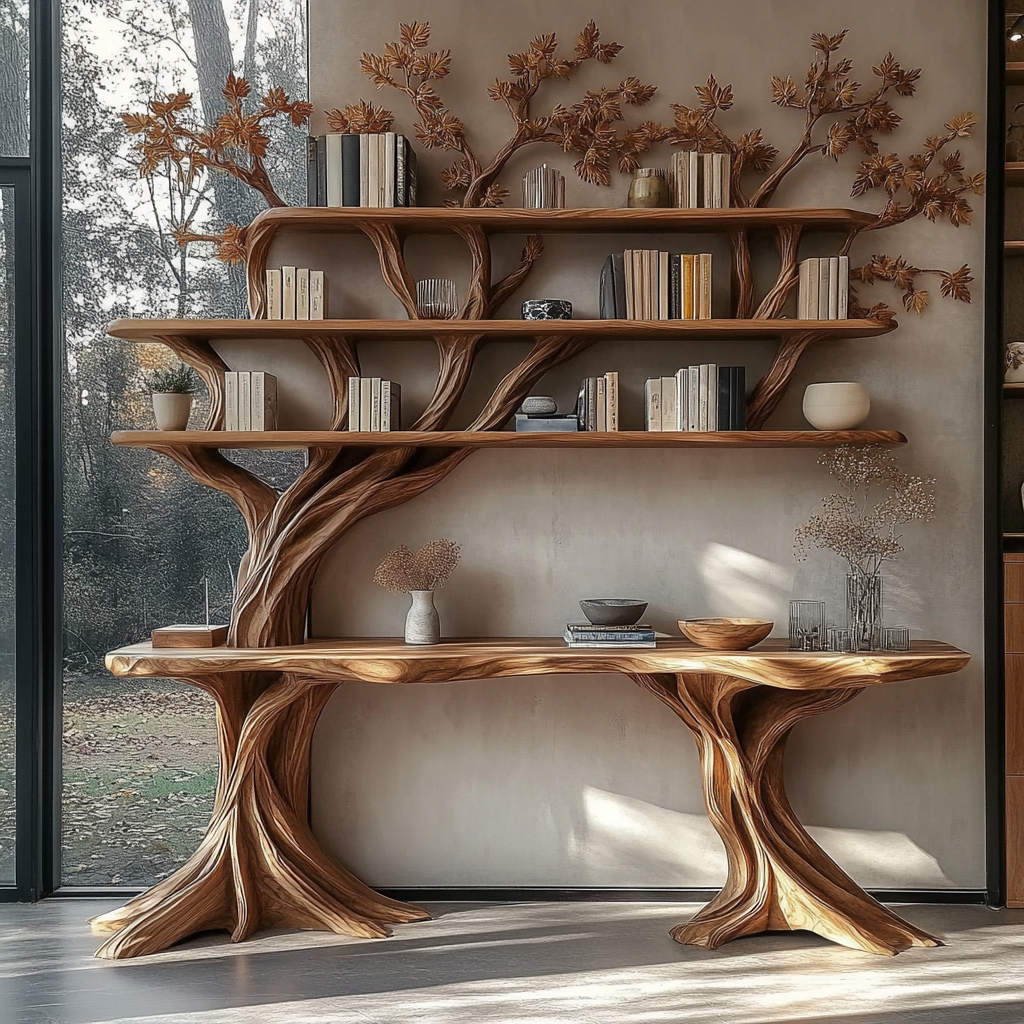
- Vary book orientation: Mix vertical rows with small horizontal stacks.
- Add greenery: Small trailing plants echo the natural inspiration of the design.
- Use negative space: Leave some shelves partially open so the branch structure remains visible.
- Include objects with texture: Ceramics, baskets, and framed art add balance.
- Keep color cohesive: If the shelf is dramatic, a controlled color palette prevents visual clutter.
In living rooms, a tree bookshelf can display curated hardcovers, candles, and sculptural objects. In a home office, it can hold reference books, storage boxes, and a few decorative accents. In a bedroom, softer styling with linens, baskets, and calming tones keeps the look restful.
Where a Tree Branch Bookshelf Works Best
One of the strengths of this shelving style is its flexibility. A well-chosen tree bookshelf can enhance many types of spaces.
Living Room
This is one of the most effective placements because the bookshelf acts as a focal point. Position it on a blank wall, beside a sofa, or near a reading chair to create a defined visual zone.
Home Office
A tree branch bookshelf adds personality to a workspace that might otherwise feel purely practical. It helps humanize the room and can make video backgrounds more distinctive.
Bedroom
In a bedroom, the organic shape softens the environment. A narrow vertical unit works especially well in corners or beside dressers.
Entryway
An entryway tree bookshelf creates a memorable first impression. It can hold a mix of books, baskets, small plants, and decorative objects without requiring the footprint of a large console.
Children’s Reading Area
For children, themed storage can make books feel more accessible and fun. A tree bookshelf turns reading into part of the room’s visual identity.
Choosing the Right Size and Shape
Before buying or commissioning a tree branch bookshelf, measure carefully. The most beautiful design can still feel awkward if the proportions do not fit the room. Consider ceiling height, wall width, and the amount of storage you realistically need.
If your room is small, choose a tall, narrow shelf that emphasizes verticality. In a larger room, a wider or more sculptural piece can command attention. Also think about shelf depth. Some artistic designs look striking but may not fit oversized books or storage boxes.
Weight capacity matters too. If you plan to store many heavy hardcovers, ensure the branches and mounting system are engineered for substantial loads. Decorative shelving and true library storage are not always the same thing.

Color and Finish Ideas
The finish of a tree bookshelf dramatically affects how it interacts with the room.
- Natural wood: Warm, timeless, and easy to blend with many interiors.
- White: Fresh, airy, and especially effective in Scandinavian or minimalist rooms.
- Black: Bold and graphic, ideal for modern interiors seeking contrast.
- Green or earthy tones: Reinforce the botanical inspiration.
- Distressed finishes: Add age and rustic charm.
When in doubt, match the finish to either your flooring tone, other wood furniture, or key accent colors in the room. This helps the bookshelf stand out without feeling disconnected.
Custom vs. Ready-Made Tree Bookshelves
Ready-made options are convenient and often budget-friendly. They are ideal if you want a quick style upgrade or need a standard size. Many modern furniture brands now offer tree-inspired shelving in flat-pack or assembled formats.
Custom pieces, however, allow you to tailor dimensions, materials, branch density, and finish. If you have an unusual wall, a specific design vision, or a desire for heirloom-quality craftsmanship, custom may be worth the investment. A bespoke tree branch bookshelf can be designed around ceiling slopes, alcoves, or exact storage requirements.
Maintenance and Practical Care
Like any furniture, a tree bookshelf lasts longer with proper care. Dust tends to gather on angled branches and decorative objects, so regular cleaning is important. Use a soft cloth and avoid harsh cleaners that could damage wood finishes or paint.
For wall-mounted units, periodically check anchors and brackets. For freestanding models, confirm stability, especially in homes with children or pets. Distribute weight evenly to prevent strain on individual branches, and avoid overloading delicate extensions.
Why This Design Continues to Grow in Popularity
The rising interest in biophilic design helps explain why the tree branch bookshelf remains so appealing. People increasingly want interiors that feel grounded, calming, and connected to nature. While houseplants, wood tones, and natural textiles all contribute to that effect, a tree bookshelf delivers it in a particularly creative way.
It also responds to a desire for furniture with personality. Many homeowners are moving beyond generic storage in favor of pieces that express taste and tell a story. A tree bookshelf feels artistic but still practical, which gives it enduring value.
Final Thoughts
A well-designed tree branch bookshelf can completely change the mood of a room. It adds movement, texture, and individuality while serving a very practical purpose. Whether you prefer a sleek wall-mounted silhouette, a rustic reclaimed wood statement piece, or a playful version for a child’s room, this style offers a refreshing alternative to ordinary shelving.
If you want storage that doubles as art, a tree bookshelf is one of the most effective choices available. It brings nature indoors, makes use of vertical space, and creates an unforgettable focal point in almost any interior.