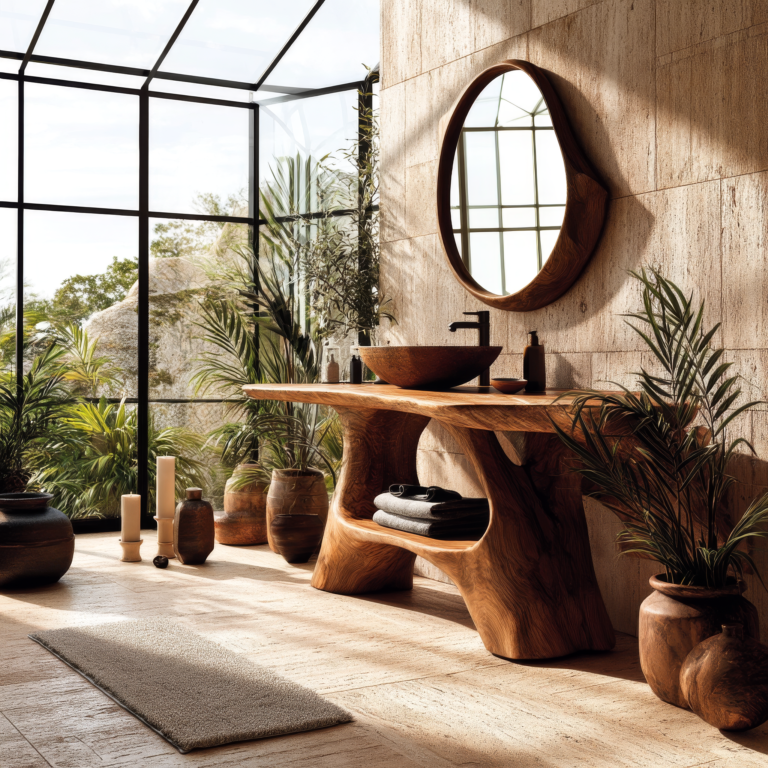
A well-designed bathroom vanity does more than hold a sink and store daily essentials. It anchors the room, shapes the overall style, and can completely change how warm and inviting the space feels. Among the many materials available, wood stands out for its ability to soften hard bathroom surfaces and introduce natural texture. Whether your space is modern, rustic, coastal, Scandinavian, or transitional, the right wood vanity can make the bathroom feel more grounded and elevated at the same time.
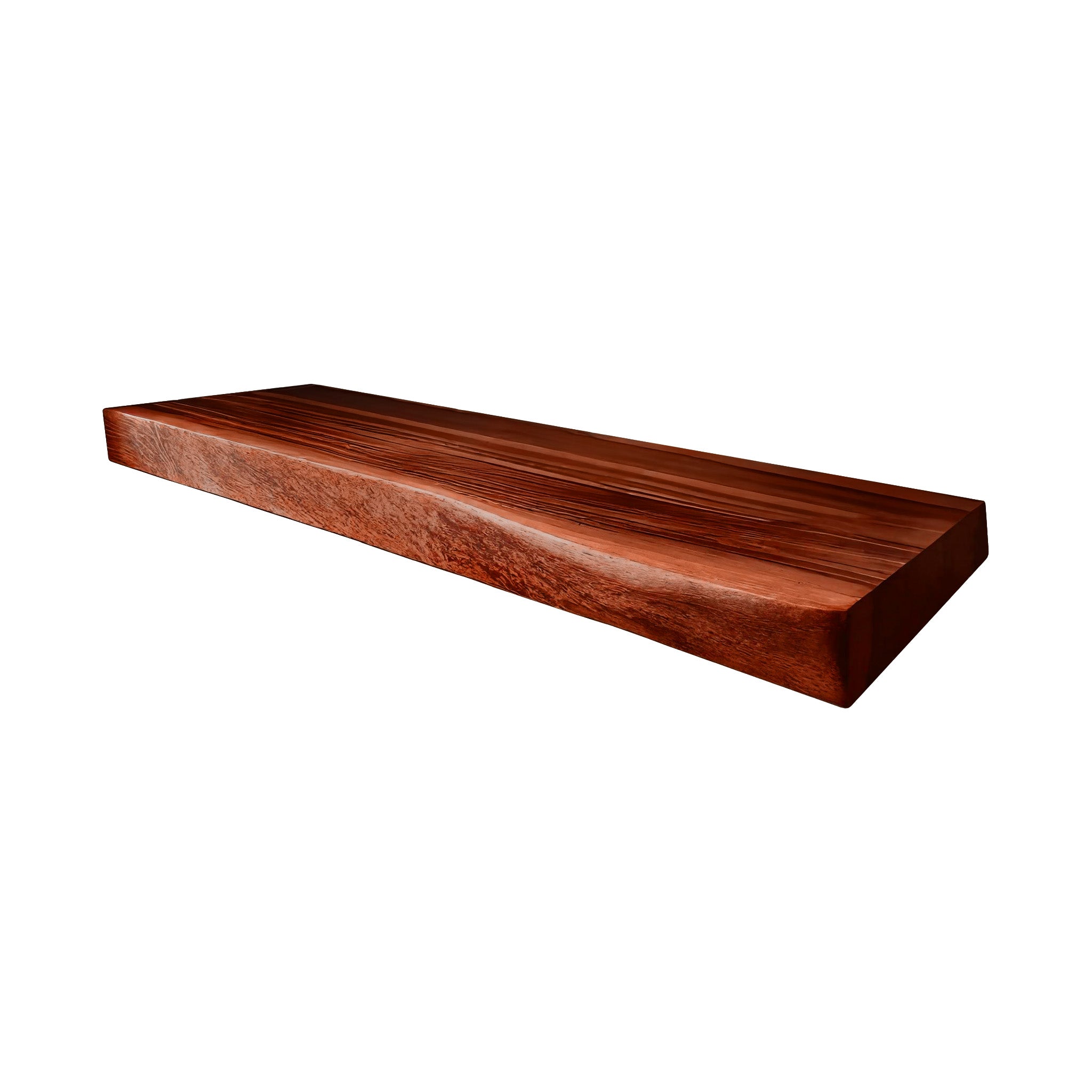
From richly grained oak to light ash, walnut, teak, and reclaimed wood, today’s vanity designs offer far more than a basic cabinet. Homeowners can choose streamlined silhouettes, statement-making custom pieces, or practical storage-focused layouts that work beautifully in busy family bathrooms. If you want a look that feels timeless yet current, these wood bathroom vanity ideas offer plenty of inspiration.
Why a Wood Bathroom Vanity Works So Well
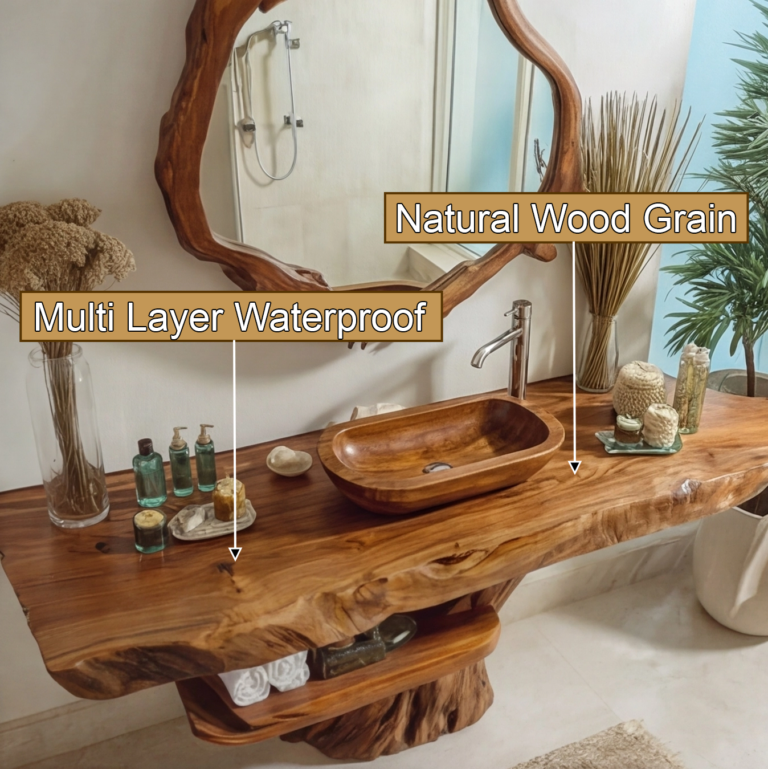
Bathrooms often contain cool materials such as tile, stone, porcelain, glass, and metal. A wood bathroom vanity introduces a balancing element that adds warmth, depth, and visual comfort. Natural wood grain creates movement and character, helping even a simple vanity feel distinctive.
Another advantage is versatility. A natural wood bathroom vanity can feel spa-like and minimal in one setting or rustic and full of charm in another. The finish, hardware, sink style, and countertop all influence the final look. Because wood can be stained, sealed, painted, or customized, it adapts easily to nearly any design vision.
When properly finished for moisture resistance, wood is also a durable option for bathrooms. High-quality construction, sealed surfaces, and good ventilation help maintain its appearance over time.
Choose a Natural Wood Vanity for Timeless Appeal
A natural wood bathroom vanity is one of the most enduring choices for homeowners who want a warm, authentic aesthetic. Instead of hiding the material under heavy paint, this style celebrates the wood’s natural knots, grain patterns, and tonal variation.
Light wood tones such as white oak, maple, and ash work especially well in calm, airy bathrooms. They pair beautifully with white walls, creamy stone countertops, and brushed nickel or matte black hardware. Medium and darker woods like walnut add richness and sophistication, making them ideal for bathrooms where you want a more dramatic effect.
To highlight the vanity, keep surrounding finishes simple. Think soft tile, understated lighting, and mirrors with clean lines. This approach lets the wood become a focal point without overwhelming the room.
Embrace the Clean Look of a Floating Wood Bathroom Vanity
A floating wood bathroom vanity is a favorite in modern and contemporary bathrooms because it creates a streamlined, open appearance. Mounted to the wall with space beneath, a floating vanity can make even a smaller bathroom feel larger and less crowded.
This design is especially effective when paired with large-format tile, under-vanity lighting, or a minimalist vessel or integrated sink. The visible floor beneath the vanity adds visual openness and emphasizes the warmth of the wood grain. It is an excellent choice for homeowners seeking a sleek profile without sacrificing personality.
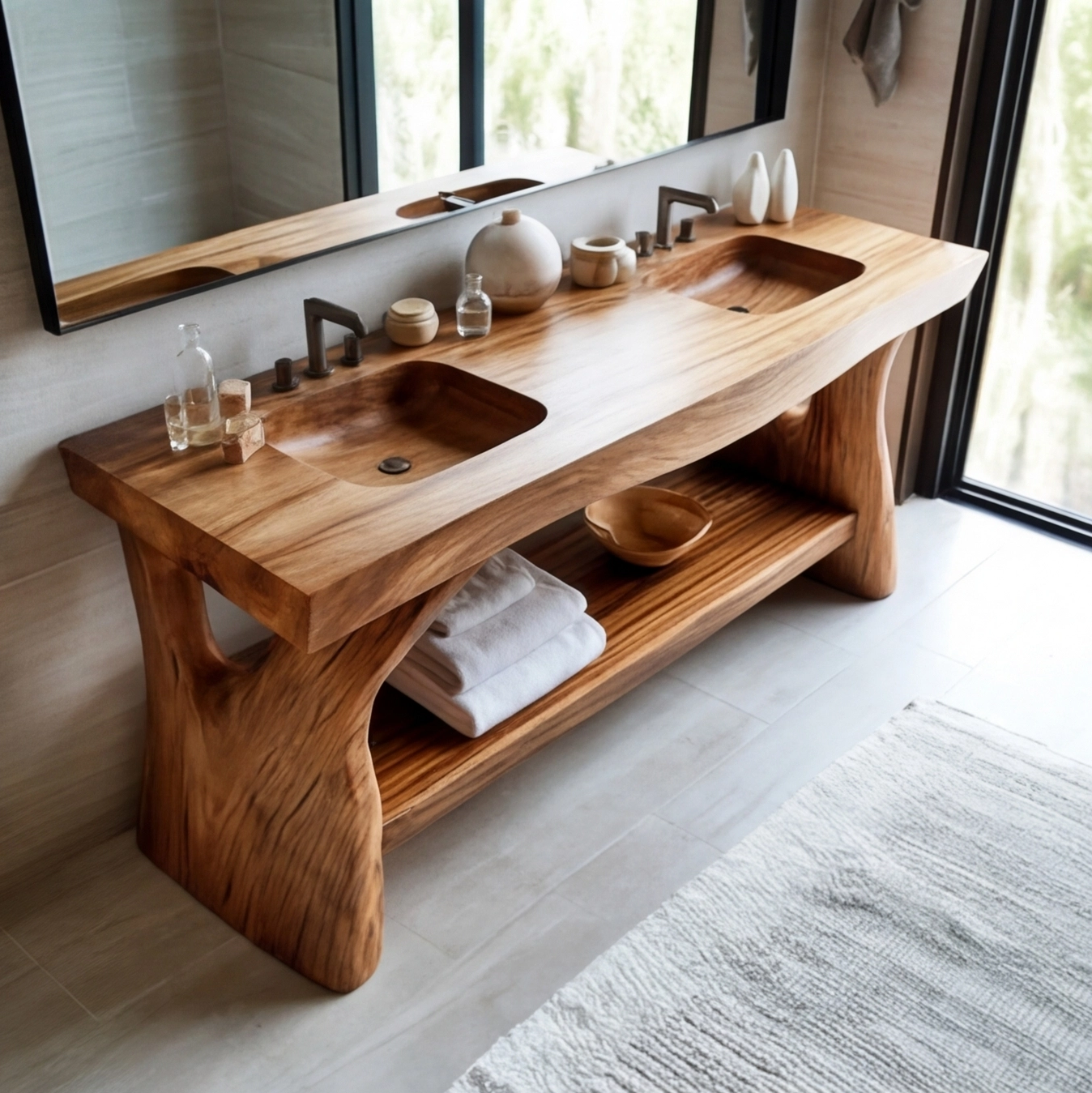
For function, floating designs can still include drawers, open shelving, or hidden organizers. If storage is a top priority, choose a model with deep drawers and thoughtful compartment layouts. The result is a vanity that feels light and architectural while remaining practical for everyday use.
Create a Balanced Layout with a Single Sink Wood Bathroom Vanity
A single sink wood bathroom vanity is ideal for powder rooms, guest bathrooms, and many primary bathrooms where space needs to be used efficiently. This style delivers warmth and storage without requiring a large footprint, making it a smart option for both renovations and new builds.
One advantage of a single sink layout is design flexibility. With only one basin to accommodate, you can prioritize wider drawers, extra counter space, or a more sculptural furniture-inspired silhouette. In smaller rooms, a single sink vanity often provides the best balance between daily convenience and uncluttered design.
To maximize the look, consider pairing the vanity with a large mirror to reflect light and visually expand the room. Wall sconces on each side can add symmetry and improve task lighting. If you want a refined yet approachable feel, a wood vanity with a simple quartz or marble top creates an elegant contrast.
Try an Organic Modern Bathroom Vanity for a Soft, Elevated Feel
The organic modern bathroom vanity trend blends clean contemporary lines with tactile natural materials. It is one of the most popular approaches for homeowners who want a bathroom that feels current but not cold. Wood plays a central role in this style because it introduces softness and authenticity to otherwise minimal spaces.
An organic modern vanity often features flat-panel drawers, rounded edges, subtle hardware, and a restrained color palette. White oak, walnut, and other richly textured woods pair well with plaster-like walls, stone sinks, warm metals, and neutral textiles. The overall effect is calming, sophisticated, and highly livable.
To complete the look, layer in natural accents such as woven baskets, linen hand towels, ceramic accessories, and greenery. The vanity becomes part of a broader design story centered on simplicity, warmth, and thoughtful materials.
Go Custom for a Perfect Fit and Personalized Style
A custom wood bathroom vanity offers the greatest freedom in both aesthetics and function. If your bathroom has unusual dimensions, specific storage needs, or a very defined style direction, custom cabinetry can solve problems that off-the-shelf options cannot.
With a custom build, you can choose the exact wood species, stain tone, drawer configuration, hardware, countertop material, and sink placement. You can also design details such as integrated open shelving, toe-kick lighting, drawer organizers, or furniture-style legs. For primary bathrooms, custom vanities are especially useful when you want to maximize every inch while maintaining a polished, tailored look.
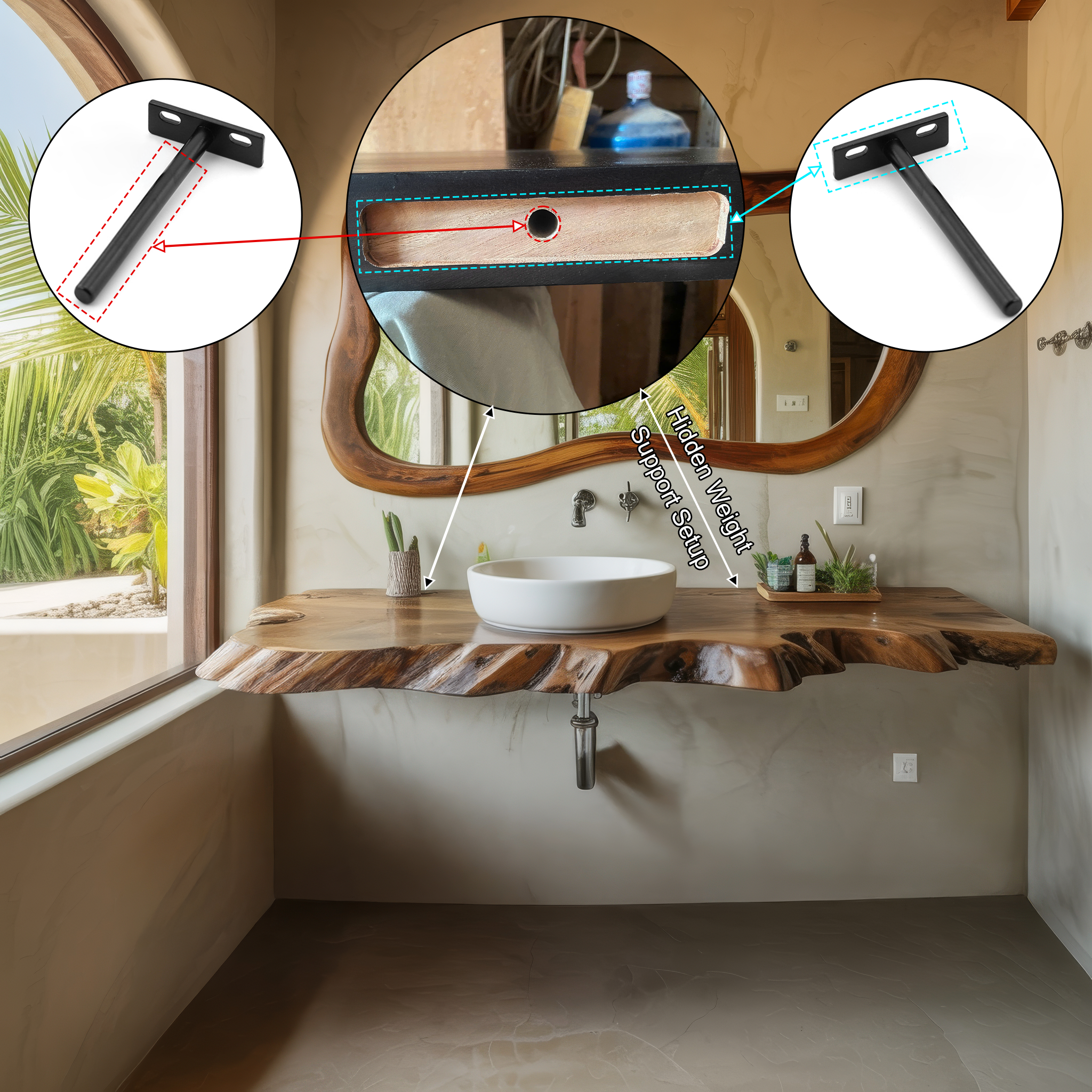
Although a custom vanity typically costs more upfront, it can deliver better long-term value by combining high-quality craftsmanship with a design that truly suits your home. For homeowners prioritizing longevity and uniqueness, this is often the best investment.
Explore Rustic Wood Vanity Ideas for Character and Charm
A rustic wood vanity can bring warmth and personality to bathrooms that need a sense of history and texture. Reclaimed wood, distressed finishes, visible joinery, and natural imperfections all contribute to this inviting aesthetic. Rustic does not have to mean heavy or overly traditional, either. Today’s interpretations often blend weathered wood with cleaner silhouettes for a fresher result.
To keep a rustic vanity feeling intentional, pair it with refined elements such as a crisp white sink, simple hardware, and classic tile. This contrast helps the piece stand out while avoiding an overly themed appearance. A rustic vanity is especially effective in farmhouse, cabin, lodge, and nature-inspired interiors, but it can also add warmth to modern bathrooms when used sparingly.
Best Wood Types for Bathroom Vanities
Not all wood species look or perform the same way in a bathroom. Selecting the right material affects both the style and durability of your bathroom vanity.
- White oak: Highly popular for its durability, subtle grain, and light, contemporary look.
- Walnut: Rich and luxurious with deep tones that create a sophisticated statement.
- Teak: Naturally moisture-resistant and ideal for spa-like bathrooms.
- Maple: Smooth-grained and versatile, suitable for many finishes and styles.
- Reclaimed wood: Full of character and ideal for rustic or one-of-a-kind designs.
Engineered wood with quality veneer can also be a practical option when properly constructed and sealed. It may offer greater stability in environments with changing humidity levels.
How to Pair Countertops and Hardware with Wood
The countertop and hardware you choose can dramatically affect how a wood vanity reads in the room. For a clean and timeless look, white quartz remains one of the best companions to natural wood. Marble offers a more luxurious appearance, while concrete can create a more modern, architectural edge.
Hardware also matters. Matte black adds crisp contrast and works well in modern and rustic spaces. Brushed brass introduces warmth and a slightly elevated feel. Chrome and polished nickel suit more classic or transitional bathrooms. If you want the wood to be the star, choose low-profile pulls or integrated finger pulls for a quieter finish.
Sink style contributes to the final expression too. Undermount sinks feel seamless and practical, vessel sinks can make a stronger design statement, and integrated solid-surface sinks suit minimalist settings.
Storage Ideas That Make a Vanity More Functional
Beauty matters, but a vanity must also work hard every day. The best wood vanity ideas combine attractive materials with thoughtful storage. Deep drawers are often more useful than standard cabinets because they keep toiletries and tools accessible. Dividers, built-in trays, and vertical organizers make it easier to maintain order.
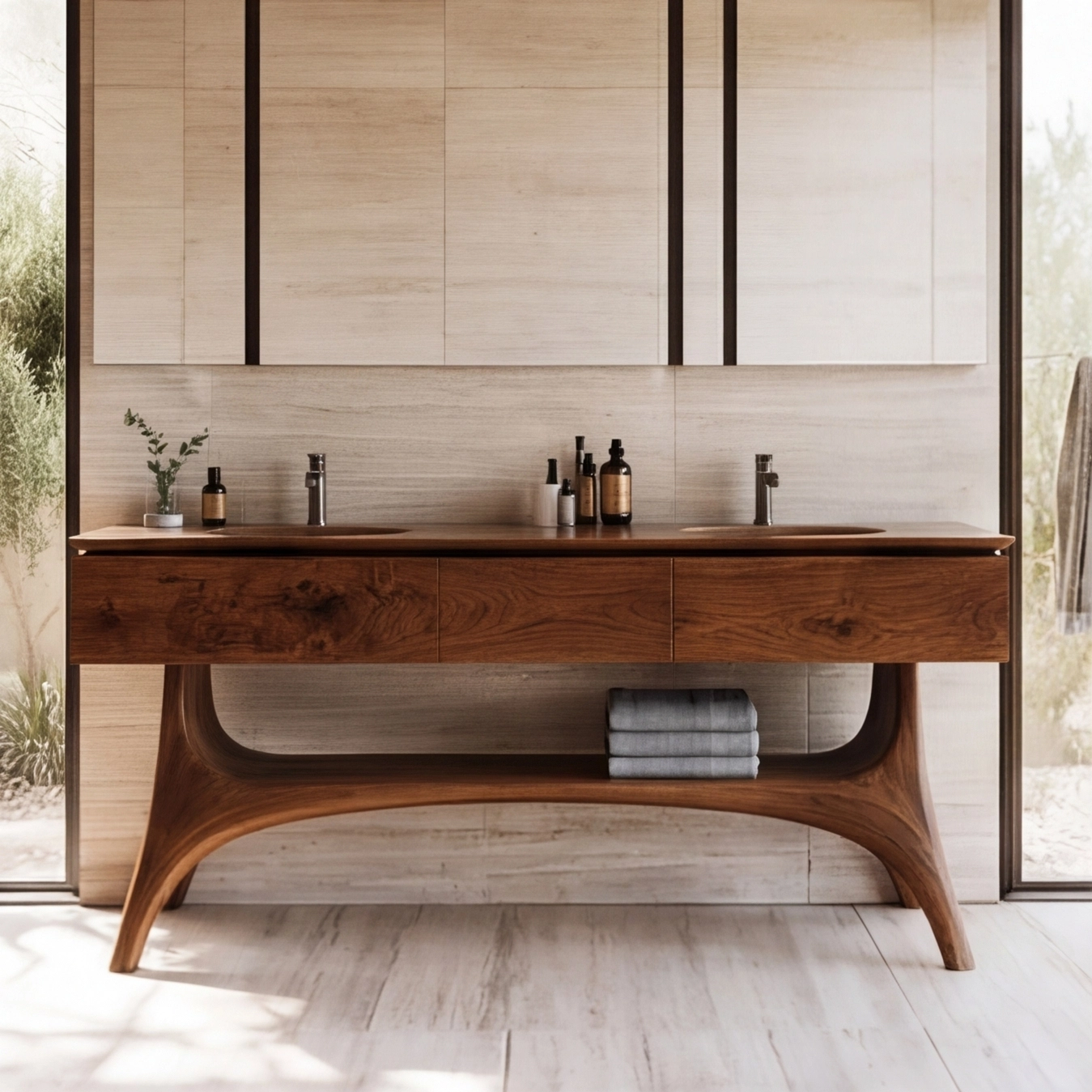
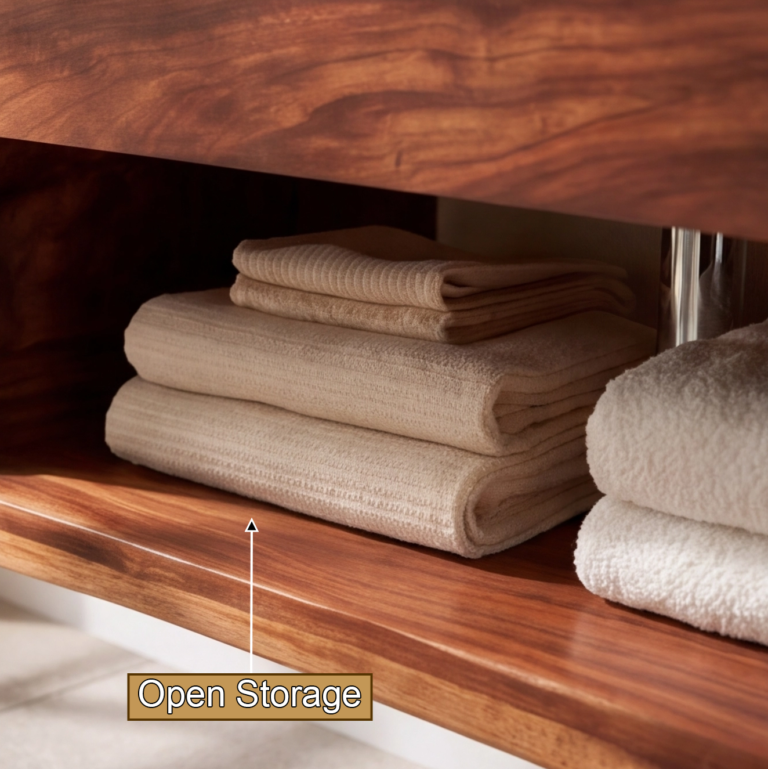
Open shelving can also be useful, especially in a floating wood bathroom vanity. Rolled towels, baskets, and frequently used items can be displayed in a way that feels intentional rather than cluttered. In smaller bathrooms, consider a vanity with a drawer stack on one side or extra shelves below to maximize utility.
If more than one person uses the space, a custom layout can assign zones for each user. This small planning detail can significantly improve daily routines.
Design Tips for Small Bathrooms
Wood vanities can work beautifully in compact bathrooms when scaled appropriately. A single sink wood bathroom vanity with a slim depth helps preserve circulation space while still adding natural warmth. Floating designs are particularly effective because they keep the floor visible, which creates a larger visual impression.
Choose lighter wood finishes if you want the room to feel brighter and more open. Pair the vanity with a large mirror, soft wall color, and strong lighting to expand the sense of space. If storage is limited, add mirrored medicine cabinets or recessed shelving nearby so the vanity top can stay clear.
How to Maintain a Wood Bathroom Vanity
To keep a wood vanity looking beautiful, regular care is essential. Wipe away standing water quickly, especially around the sink and countertop edges. Use gentle, non-abrasive cleaners and avoid harsh chemicals that may strip the finish. Good bathroom ventilation also helps reduce excess moisture exposure.
It is wise to select a vanity that has been properly sealed for bathroom use. If the finish begins to show wear over time, refinishing or resealing may restore protection and appearance. With the right care, a quality wood vanity can remain a standout feature for many years.
Final Thoughts
A wood bathroom vanity is one of the most effective ways to bring natural warmth into a bathroom. Whether you prefer the airy simplicity of a floating wood bathroom vanity, the efficient practicality of a single sink wood bathroom vanity, the softness of an organic modern bathroom vanity, or the tailored appeal of a custom wood bathroom vanity, there is a solution for every layout and style.
By combining durable materials, smart storage, and finishes that complement the rest of the room, you can create a bathroom that feels both functional and beautifully inviting. A thoughtfully chosen natural wood bathroom vanity does not just complete the room. It gives it soul, texture, and lasting character.